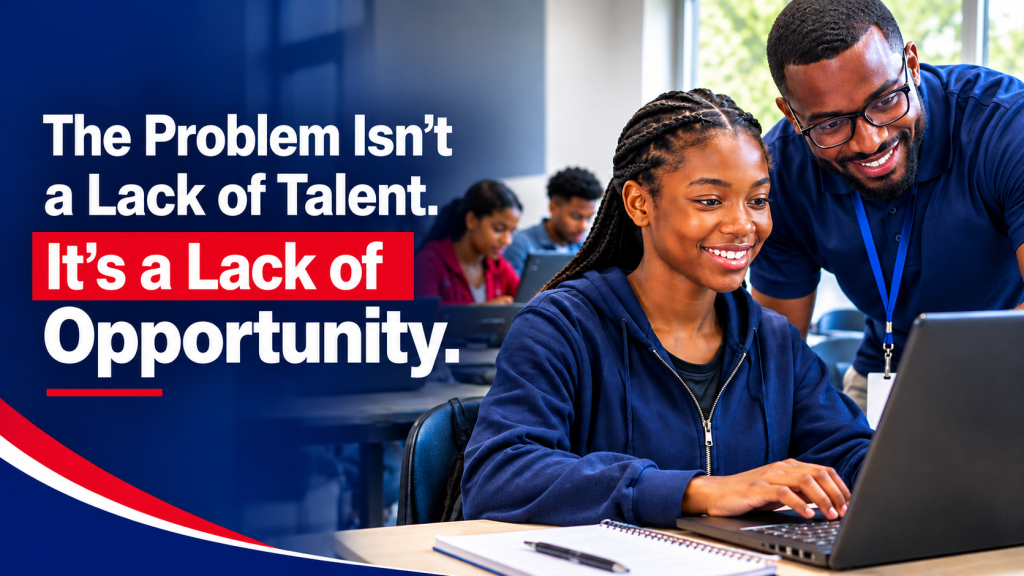
A student can have the curiosity to learn, the determination to succeed, and the talent to build something meaningful. But without access to the right tools, training, mentorship, and opportunities, that potential can remain hidden.
In a world where technology is becoming part of almost every aspect of education and work, digital skills are increasingly important. Students use technology to learn. Job seekers use it to find and apply for opportunities. Entrepreneurs use it to build businesses. Professionals use it to communicate, collaborate, and grow their careers.
But not everyone has the same access to these opportunities.
For some people, the challenge is not a lack of intelligence or motivation. It is a lack of access.
No computer. Limited internet. Expensive training. Lack of mentorship. Limited exposure to technology. Few opportunities to practice new skills.
These barriers can make it difficult for talented individuals to reach their full potential.
At Simplified IT Institute, we believe that the problem is often not a lack of talent. It is a lack of opportunity.
What Does the Digital Divide Really Mean?
When people hear the term digital divide, they may think only about people who do not have computers or internet access.
But the problem is much broader.
The digital divide can also involve differences in access to:
- Computers and other technology
- Reliable internet
- Digital skills training
- Quality educational resources
- Qualified instructors, mentorship, and career guidance
- Opportunities to practice technical skills
- Professional networks
- Career and workforce opportunities
Having a smartphone, for example, does not necessarily mean someone has the tools needed to learn web development, analyze data, build a professional portfolio, or prepare for a technology career.
Access to technology matters, but access to meaningful learning matters just as much.
A Lack of Computers Can Become a Lack of Opportunity
Imagine a student who wants to learn coding.
They watch tutorials on a phone. They read about programming. They are fascinated by technology and dream of becoming a developer.
But they don’t have a computer.
Eventually, the gap between wanting to learn and being able to practice becomes a serious barrier.
Digital skills require practice. Students need opportunities to work with software, create projects, make mistakes, solve problems, and try again.
A computer can therefore be much more than a piece of equipment.
It can be a classroom, a laboratory, a creative studio, and a gateway to opportunity.
Providing technology access can give learners the chance to turn curiosity into practical skills.
The Cost of Digital Education Can Be a Barrier
Digital education can create incredible opportunities, but quality training is not always affordable or accessible.
Courses, software, certifications, internet access, computers, and other learning resources can add up quickly.
For someone with limited financial resources, these costs can make technology education feel out of reach.
This creates a difficult situation: the skills that could help someone improve their economic opportunities may be the same skills they cannot afford to learn.
That is why accessible and affordable digital education matters.
When financial barriers are reduced, more people can have the opportunity to develop skills that can support their educational and professional goals.
Internet Access Is Only Part of the Challenge
The internet has transformed education.
Today, someone can access tutorials, online courses, documentation, career resources, communities, and educational content from almost anywhere.
But this only works when people have reliable and affordable connectivity.
Limited internet access can make online learning frustrating and inconsistent. A learner may have the motivation to complete a course but struggle to download materials, attend virtual classes, conduct research, or access online tools.
Digital inclusion therefore requires more than simply telling people to “go online.”
People need the skills, devices, connectivity, and support necessary to use technology effectively.
Learning Without Mentorship Can Feel Like Learning Alone
Technology education is not only about information.
A learner can find thousands of tutorials online and still feel lost.
What should I learn first?
Which skill should I focus on?
How do I build a portfolio?
How can I turn this skill into a career?
What should I do when I get stuck?
Mentorship can help answer these questions.
A mentor can encourage, practical advice, feedback, and perspective. They can help learners understand that struggling with something new does not mean they are incapable.
Sometimes, what a learner needs most is someone who says:
“Keep going. You can do this.”
Digital Skills Need Practice, Not Just Theory
Reading about technology is different from using it.
A student may understand what a website is but still need practical experience to build one.
Someone may understand what graphic design means but need hands-on practice to create professional designs.
A learner may know the definition of cybersecurity but need practical exercises to understand how security works.
This is why hands-on learning is so important.
Learners need opportunities to:
Build projects
Solve real problems
Practice with technology
Work with others; receive feedback
Learn from mistakes
Develop portfolios
Apply their knowledge and skills
become more powerful when learners have opportunities to use them.
The Gap Between Education and Employment
Another challenge is the gap between learning a skill and knowing how to apply it professionally.
A person may complete a course and still ask:
“What do I do next?”
Digital education should therefore go beyond simply completing lessons.
Learners also need exposure to career readiness, professional communication, teamwork, problem-solving, portfolio development, and workplace expectations.
The goal should be to help people understand not only what they can learn, but also where those skills can take them.
Talent Exists Everywhere
One of the biggest mistakes we can make is assuming that people who lack access also lack ability.
A student without a computer may still have incredible creativity.
A young person who cannot afford training may have strong problem-solving skills.
Someone who has never had access to professional technology may have the potential to become an excellent developer, designer, technician, entrepreneur, or technology professional.
Talent does not always come with resources.
Sometimes talent is sitting quietly in a classroom.
Sometimes it is waiting in a community.
Sometimes it is behind a person who has never been given the opportunity to discover what they can do.
The question is not always:
“Who has talent?”
Sometimes the better question is:
“Who has been allowed to develop theirs?”
What Happens When Opportunity Is Provided?
Give a learner access to a computer, and they can practice.
Give them quality training, and they can develop skills.
Give them mentorship, and they can gain direction.
Give them opportunities to apply their knowledge, and they can build confidence.
Give them career guidance, and they can begin to see possibilities beyond the classroom.
These resources work together.
Technology opens the door. Education helps people walk through it. Mentorship helps them find the right direction. Opportunity gives them somewhere to go.
How Simplified IT Institute Is Helping
At Simplified IT Institute, our mission is centered on expanding access to technology education, digital skills, workforce development, mentorship, and technology resources.
We believe people should have the opportunity to learn and develop the skills they need to participate in an increasingly digital world.
Our work focuses on helping learners gain practical knowledge while creating growth opportunities.
This includes areas such as digital literacy, computer education, technology skills, career readiness, and access to technology resources.
The goal is not simply to teach someone how to use technology.
The goal is to help people see what becomes possible when they have access to it.
Bridging the Gap Takes All of Us. The digital divide cannot be solved by one organization alone.
Schools, nonprofits, educators, businesses, community leaders, technology professionals, donors, and individuals all have a role to play.
We can help by:
Donating computers and technology equipment; supporting accessible digital skills programs; volunteering as mentors; sharing educational resources; supporting scholarships and training opportunities; creating internship and career opportunities; encouraging young people to explore technology; helping communities understand the value of digital skills. Even small actions can contribute to a larger change.
The Opportunity Behind the Technology: A computer is valuable.
Internet access is valuable.
Training is valuable.
But the greatest value is what these resources can help a person become.
Behind every student using a computer is a potential professional.
Behind every learner attending a training session is a potential entrepreneur, designer, developer, technician, educator, or technology leader.
Behind every person learning a new digital skill is a possibility that has not yet been fully realized.
That is why digital inclusion matters.
The Problem Isn’t a Lack of Talent. There are talented people everywhere.
- What is not always everywhere is access.
- Access to technology.
- Access to education.
- Access to mentors.
- Access to reliable resources.
- Access to opportunities.
When we remove those barriers, we give people a better chance to demonstrate what they are capable of achieving.
At Simplified IT Institute, we believe that bridging the digital divide is ultimately about more than technology. It is about people.
It is about creating opportunities for individuals to learn, grow, and build a future they can be proud of.
Everyone Deserves a Chance to Discover Their Potential
The next great developer, designer, entrepreneur, technology professional, or community leader may already be out there.
They may simply need someone to open the door.
The problem isn’t a lack of talent. It’s a lack of opportunity.
And when we create opportunity, we don’t just change what someone can learn.
We can change what they believe is possible.
Help Us Bridge the Digital Divide
Support the mission of Simplified IT Institute by helping expand access to digital skills, technology, education, and opportunity.
Learn. Grow. Connect. Create.
Together, we can help turn potential into possibility.